Showing posts with label Positioning. Show all posts

Wednesday, January 16, 2013

3 Things Marketers Can Learn From Justin Timberlake's Launch


What can marketers learn from Justin Timberlake's new album launch? It has been awhile since Justin Timberlake produced a music album. Over the past years, Justin's number one question was, "You going to sing again or did you just quit?"

On January 10, 2013, with one tweet Justin Timberlake answered that question. 

Justin Timberlake's Tweet

"To whom it may concern...I think I'M READY! #JT2013." 
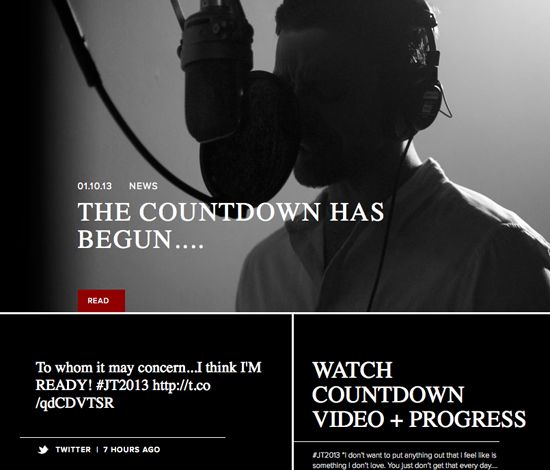


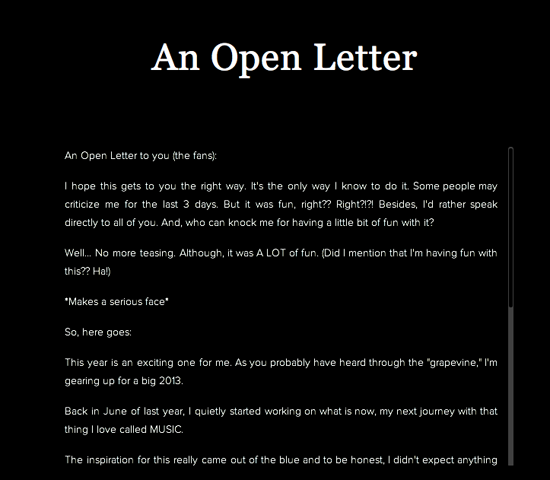
Within an hour, Justin Timberlike was trending on Twitter. The tweet contained a link to a YouTube video that showed Justin walking through multiple doors at a recording studio telling us why he has waited so long to do another album. In essence Justin said, "I don't want to put anything out that I feel like is something I don't love. You just don't get that every day. You have to wait for it." Then he walks through the last door and up to the mic and says, "I'M READY". Then the video routed you to a sign up page with a countdown (days, hours, minutes, seconds). Once you signed up you were directed to a letter from Justin telling you more about his new music venture.


I thought the execution was brilliant. I said to myself, "Nice work Justin. That was awesome."

Three Things Marketers Can Learn from JT's launch

There were three reasons I really like Justin's launch and think they apply perfectly to marketers.

1. The Why

The why is one of the most important parts of good brand positioning and a strong marketing campaign. As you watched Justin's video you understood why he had waited so long to launch his next album. I wish I could find the video, but it is no longer on the site. The why is an important part of telling a marketers story.

2. Exclusivity 

Exclusivity or what I define as the seat to the inner circle has always been a big part of creating music fans. Justin took this music & marketing principle and used it to his advantage. To kick off his campaign, he tweeted to his 15 million twitter followers. He did it with one tweet. Within the hour, Justin was trending on Twitter. Social media has really changed the game for the music industry.

3. Creativity

Without creativity marketing is stale or old (been there done that). I wrote another blog post how to find your creative genius here. Justin's approach was creative and definitely out of the box. He used new technologies like twitter to step out of the box and launch his campaign in a unique but exclusive way. 

Nice work Justin.


You can follow me on twitter here


Learn more about me here


Monday, January 2, 2012

Resonator #2 - about.me


The "Resonator" blog series highlights companies who build products or services that resonate. Learn the 3 rules to developing a resonator here. This week I am highlighting a new start up called about.me.

Company Overview

What is about.me?

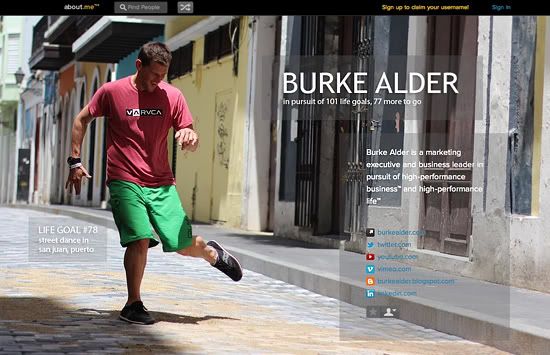
So you are on Facebook, Twitter, LinkedIn, and many other social media sites. You would like to put these sites all in one location so you can send friends and colleagues a single URL where they can learn about you in 30 seconds or less. About.me solves that problem. In about 2 minutes or less you can create a personal profile page, add a personal pic, and link your social media sites. Then you can send and use this URL to promote you, your services, your content, and really bring your personal brand to life.

My about.me Personal Profile Page


I created a personal profile in less than two minutes. The user interface is easy to use and walks you through a simple step by step process. It took me a little longer to find the picture that I thought represented who I am in less than 30 seconds. Here is the link to my personal profile page on about.me. Your can create yours for free here.


Thursday, December 8, 2011

Lady Gaga's Brand Positioning


Lady Gaga, what more can I say.


Over that last couple of years we have been accustomed to Lady's Gaga's crazy antics. You never know what she will be wearing or what she will be doing next, she is constantly keeping us on our toes. If she were a product, her go to market strategy would always be very guerilla and atypical. She understands her market perfectly. So why would she host a thanksgiving special on a night filled with family and turkey. Would she be wearing a turkey?


Photobucket

I was intrigued by how she might position herself during a thanksgiving special, I decided to watch it. Would her crazy antics be too much for parents and grandmas, this was no Charlie Brown's Thanksgiving Special.


I sat down to watch


Perfect Brand Positioning


So remember, families across the United States all gathered in front of the fire, stomachs full, to watch "A Very Gaga Thanksgiving". So how would Lady Gaga use this opportunity. All I can say is that she seized the moment. She knew her audience and positioned herself perfectly for those who would be watching.


She made Grandma proud by singing with Tony Bennett. She intrigued parents as she visited her old private school, prepared a meal with famous chef, Art Smith, and sat down with Katie Couric to answer important questions that many people have always wanted to know. She was not dressed in a turkey dress, but very elegant dresses that positioned herself as a rising starlit. Tony Bennett even called her the next Pablo Picasso. All I could think was how well she seized the moment and positioned herself perfectly for the opportunity she was given. I can see Grandmas across the country saying, "That Gaga isn't so bad"

.


3 Positioning Tips From Lady Gaga


1. Know your audience


2. Deliver a message specific to your audience


3. Deliver brand emotions that resonate with new markets


To say the least, I was very impressed by Lady Gaga's positioning

Sunday, August 28, 2011

Internal Product Marketing Tips


As marketing professionals, almost all of your efforts are focused on the external audience, the message, the campaign, and the brand to name a few. This audience is important to the success of your marketing campaigns and company. There is also another important audience that cannot be missed as you develop strong marketing within your organization. I call them the internal audience.

Internal Audience

I define the internal audience as the departments that are within your company. For this post today I am going to narrow the internal audience to those that talk to your prospects and customers.

The Internal Product Marketing Questions (How You Doing?)

Here are a few questions you can ask yourself to see how your internal product marketing efforts are coming.

1. Is there a consistent message being told across your internal audience?
2. Does your internal audience know your value propositions?
3. Does your internal audience know why your company is better than the competition?
4. Can the internal audience quickly tell success stories of your customers?

To help answer "YES" to question #4 in our organization, we developed customer success story posters. We put these up where the internal audience could see them, read them, learn them, and incorporate them into their pitches. We wanted to keep them simple yet powerful. So we summed up the benefit in one word and their story in one to two sentences.

RESULTS:

Within a week of putting these posters up in our company, you could hear the internal audience using them in their pitches. This was a great way for our company to help the internal audience be more effective and consistent with their pitches and messages.

Here are a few examples of those posters:


Photobucket

Photobucket

Photobucket

Photobucket

Photobucket

Photobucket

Photobucket

Tuesday, July 5, 2011

3 Rules of Co-Marketing (Apple & Audi)


One of my favorite aspects of business is the development of go-to-market strategies and plans. Successful go-to-market strategies are supported by tons of business analysis and research. It is important to choose target markets and audiences based on financial and business. It is also important to understand the competition which helps you position, message, and launch products and services with big results.

Apple and Audi (Co-Marketing)

I am always interested in go-to-market strategies that include strong partnerships. Here are my 3 rules of partnership based go-to-market strategies. To share these rules, I am going to highlight a great example of Apple's product launch of Final Cut Pro X (June 21, 2011) which includes a strong partnership with Audi.


Photobucket


3 Rules of Strong Go-To-Market Partnerships

1. Similar Values


Photobucket

For a successful partnership to work you must have similar values. Take Apple, which values cutting edge technology and performance, who for their Final Cut Pro X launch developed a partnership with Audi which also values cutting edge technology and performance, mesh the two together, and you get a serious connection to performance and style.

The Final Cut Pro X go-to-market campaign features the Audi R8 which oozes high performance and cutting edge design, which is a perfect match for the new version of Final Cut which performs like a high-performance car for those doing post production video work.

2. Strong Brand Synergy


Photobucket

I really like this launch because of the synergistic partnership, you take the Apple brand and the Audi brand and you combine them to get serious brand equity. Both companies have built brands that represent cutting edge design, style, and performance creating a powerful partnership.

As you watch the Final Cut Pro X demo video click here, you see the synergy between Apple's new UI and game changing post production features and the performance of Audi's R8, which I think is pure genius. Make sure the partnerships you develop bring strong synergy to the product or service you are launching.

3. Win Win


Photobucket

The best partnerships are when both parties benefit (WIN WIN). In the Final Cut Pro X go-to-market strategy, Apple benefits from the strong brand and performance of Audi, while Audi benefits from surrounding its self around Apple brand and its new product which contains high-performance revolutionary post production features.

Great job Apple and great job Audi, this is a great example of a strong partnerships that strengthen brands and drive results.

Are there any other partnership rules you live by?

Monday, May 16, 2011

Apple's Product Positioning Against Android


About two months ago, I did a blog post on five marketing positioning strategies. You can read about the five strategies here. Since that blog post, I have been closely watching Apple's product positioning strategy against the Android phone market. Android has been using the front attack product positioning against Apple and the iPhone.

The Front Attack by Android

You probably have seen the commercial with the green Android flying around a bunch of consumer quotes. The quotes talk about how much people love Android phones over the iPhone. There is one caveat to front attack strategies, which is, they are an easily defeated.

Apple's Counterattack Positioning

So what does Apple do to defend this type of strategy? First, watch the following Apple commercial and then we will discuss their strategy and positioning.


Click here to view more of Apple's current product positioning

Apple's Flanking Strategy

Apple is using a flanking strategy. A flanking strategy shifts the focus of the customer's buying criteria to new or different issues that favor your solution.


Guidelines and Caveats


• Focus on business value

• Don't play by their rules


• Right timing


• Right target


• Right Issues


 • Don't open the "playing field"

Apple product positioning is brilliant. Here are a few of their key product differentiators and positioning from the above video:

If You Don't Have An iPhone...

"If you don't have an iPhone, then you don't have an iPod on your Phone. With your music and your playlists"

"If you don't have an iPhone, then you don't have iTunes on your phone, the world's #1 music store. With Genius, that recommends similar songs based on songs you already have purchased."

"If you don't have an iPhone, well, you don't have an iPhone."

Positioning strategies are always fluid and in constant motion, so it is important to understand how a competitor is positioning against you. By knowing their strategy you can counter position successfully.

Thursday, March 17, 2011

How Do You Compete? - 6 Rules to Win


What happens when thoughts like these cross your mind, "The competition is bigger than us, they have more money, how do we compete?" Let me answer that question with another question, "Do you know why your customers choose you over the competition? If not, it is time to learn why and give your customers a reason to choose you over the competition.


Compete with a Strong Competitive Advantage


Jaynie L. Smith, author of Creating Competitive Advantage says this, "The biggest marketing flaw in most companies is their failure to fully reap the benefits of their competitive advantages. Either they think they have a competitive advantage but don't. Or they have one and don't even releaze it. Or they know they have a strong competitive advantage but fail to promote it adequately to their customers or prospects." I recommend Jaynie's book.

Create a Competitive Advantage

So how do you create a competitive advantage? First, grab a pen and paper and get ready to go into brainstorm mode. You have your paper and pen, right? So spend a few minutes writing down why you think your customers choose you over the competition. Once you have a good list, let's make sure it passes the competitive advantage rules.

6 Important Rules

In Jaynie's book she says a competitive advantage must follow 6 important rules:

1. Competitive advantage is objective, not subjective: You can't just say people do business with you because you have great customer service or good quality.

2. It is quantifiable, not arbitrary: Let's compare the following statements, "We have great customer service." or "Ninety-five percent of our business comes from referrals." The second one passes rule #2.

3. Is in not claimed by the competition: You need to know what the other guy doesn't offer that your customer wants and claim it first.

4. It is not a cliche: Once again you can't say you have great customer service, you'll be tuned out, be specific. Something like, you provide service twenty-four hours a day, seven days a week.

5. It has to be true: It has to be true, if it is not true this can ruin your creditability and turn away customers.

6. Your customer has to care about it: You customer must really care about the competitive advantage you are touting, if it doesn't resonate it will do no good.

Here are a few examples of a good competitive advantage statments from Jaynie's book:

Company:

Seitlin Human Resources

Competitive Advantages:

"We save clients $30k to 50K annually in human resource management costs"
"We maintain a 97 percent client retention rate"

Once you have created your competitive advantages and vetted them with your customers. Make sure your employees know your competitive advantages by heart, so if anyone ever asks, "Why should I choose you over the competition?", everyone is on the same page.

Warren Buffet said this regarding competitive advantage, "The key to investing is not assessing how much an industry is going to affect society, or how much it will grow, but rather determining the competitive advantage of any given company and above all the durability of that advantage."

Thursday, March 10, 2011

Positioning - Audi (Front Attack Strategy)


In my last blog post, I discussed the 5 Key Competitive Positioning Strategies. Here is a real-world example of a Front Attack positioning strategy.

Front Attack Strategy: A front attack strategy is a direct approach based on the customer's perception of your overwhelming superiority in solution, price or reputation.


Guidelines and Caveats


 • 3:1 advantage


• Requires size, speed or surprise


• Resource intensive


 • Blatant/obvious


• Most often used and easily defeated strategy

Real-World Example

Market: Luxury Cars
Key Players: BMW, Lexus, Audi, Ferrari, Porsche, Lamborghini, Aston Martin, etc.
Company Positioning: Audi
Campaign Name: The Spell
Positioning Strategy: Front Attack
Competitors Being Attacked: Ferrari, Lexus, BMW, Mercedes Benz
True Statement to Support Attack: "Audi is growing faster than BMW, Mercedes, and Lexus." - based on change in U.S market share from 2008 - 2009

Watch Audi's execution below of the positioning strategy - Front Attack


I really thought this positioning was strong and effective. Many of us don't buy a luxury car to be predictable, but you got to love how Audi positioned itself against its main competitors with that thought in mind.

5 Marketing Positioning Strategies


Lately, I have been thinking a lot about the different types of competitive positioning strategies. The types of strategies that help to differentiate your offering and create value for your market. Short and sweet, the types of strategies that help you carve out your spot in a competitive landscape and help focus your company.


5 Key Competitive Positioning Strategies


1. Front Attack: A front attack strategy is a direct approach based on the customer's perception of your overwhelming superiority in solution, price or reputation.

Guidelines and Caveats

• 3:1 advantage
• Requires size, speed or surprise
• Resource intensive
• Blatant/obvious
• Most often used and easily defeated strategy

2. Flanking: A flanking strategy shifts the focus of the customer's buying criteria to new or different issues that favor your solution.

Guidelines and Caveats

• Don't play by their rules
• Right timing
• Right target
• Right Issues
• Focus on business value
• Don't open the "playing field"

3. Fragment: A fragment strategy divides the opportunity into smaller pieces and focuses the customer on a subset of the issues that you can address.

Guidelines and Caveats

• Leverage your position
• Requires support of your product or service
• Pick the correct base for the future
• Monitor the cost of each sale

4. Defend: A defend strategy protects your position from the inevitable assault from your competitors

Guidelines and Caveats

• Articulate your credibility
• Articulate your business value
• Beware of isolation
• Keep your eye on your competitors

5. Develop: A develop strategy establishes a position for a possible future

Guidelines and Caveats


• Not in the position to compete
• Establish presence for the future
• Focus on credibility
• Qualify your business value

I will be writing a few blog posts focusing on each positioning strategy.